Start with task geometry
- Can the platform sit directly under the work area?
- What is the required platform height and working envelope?
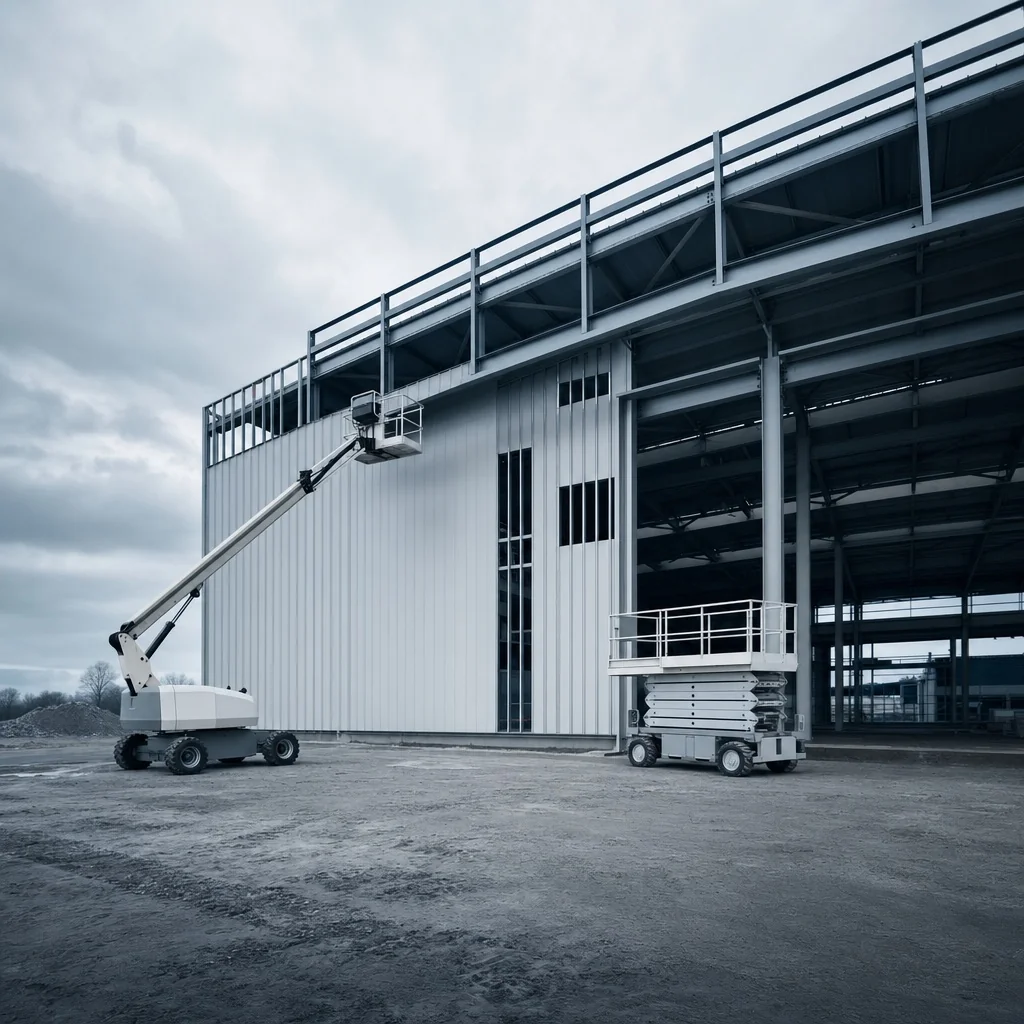
- How much outreach is needed, if any? If the task sits straight above level concrete, a scissor lift provides vertical reach and a broad deck for tools and parts. If the work requires horizontal reach over equipment or conveyors, compare boom lifts in the /aerial-lift-rental/ section.
Indoors: electric slab scissor lifts
Local distribution buildings favor compact electric models because they fit through standard double doors, maneuver in narrow rack aisles, and run without exhaust. Typical planning questions include: - Minimum aisle width and turning radius along the route - Floor loading limits on mezzanines or near dock edges - Gate, doorway, or elevator clearances See /electric-scissor-lift-rental/ for size ranges, platform capacities, and deck extension notes that matter on tight indoor runs.
Outdoors: rough-terrain scissor lifts
Unfinished industrial sites around Greensboro often mix gravel, graded fill, and clay that turns slick after storms. Rough-terrain scissor lifts use larger tires and higher ground clearance to manage ruts and soft spots. Key constraints: - Grade and surface consistency across travel paths - Stabilization needs on pads or compacted areas - Wind exposure in open lots and on elevated steel Learn how tire type, width, and weight interact with jobsite conditions at /rough-terrain-scissor-lift-rental/.
When a scissor isn’t enough
If the work sits behind conveyors, pipes, or façade features, vertical-only movement can stall progress. Compare articulating and straight booms at /boom-lift-rental/ or browse options at /aerial-lift-rental/ to understand up-and-over capability, tail swing, and setup footprints.
Greensboro-specific planning cues
- Many local buildings run long, straight aisles with polished slab floors—watch for tight turning at end caps and dock doors.
- Outdoor pads can start firm in the morning and soften after midday rain; verify travel paths before committing to unit size.
- Mixed-use sites may require moving from indoor concrete to exterior lots in one shift; a clear handoff point between electric and rough-terrain units avoids delays.
Next steps
Match platform height to the task, confirm surface conditions along the entire route, and measure every pinch point from the parking lot to the work zone. Then compare indoor vs. outdoor models to avoid over-sizing a machine that won’t fit where it needs to go.