Route and fit come first
- Smallest doorway and elevator car size on the path
- Aisle width at racking end caps and cross aisles
- Turning radius at dock levelers and corners A unit that clears the tightest point avoids mid-shift swaps that halt work.
Platform height and deck use
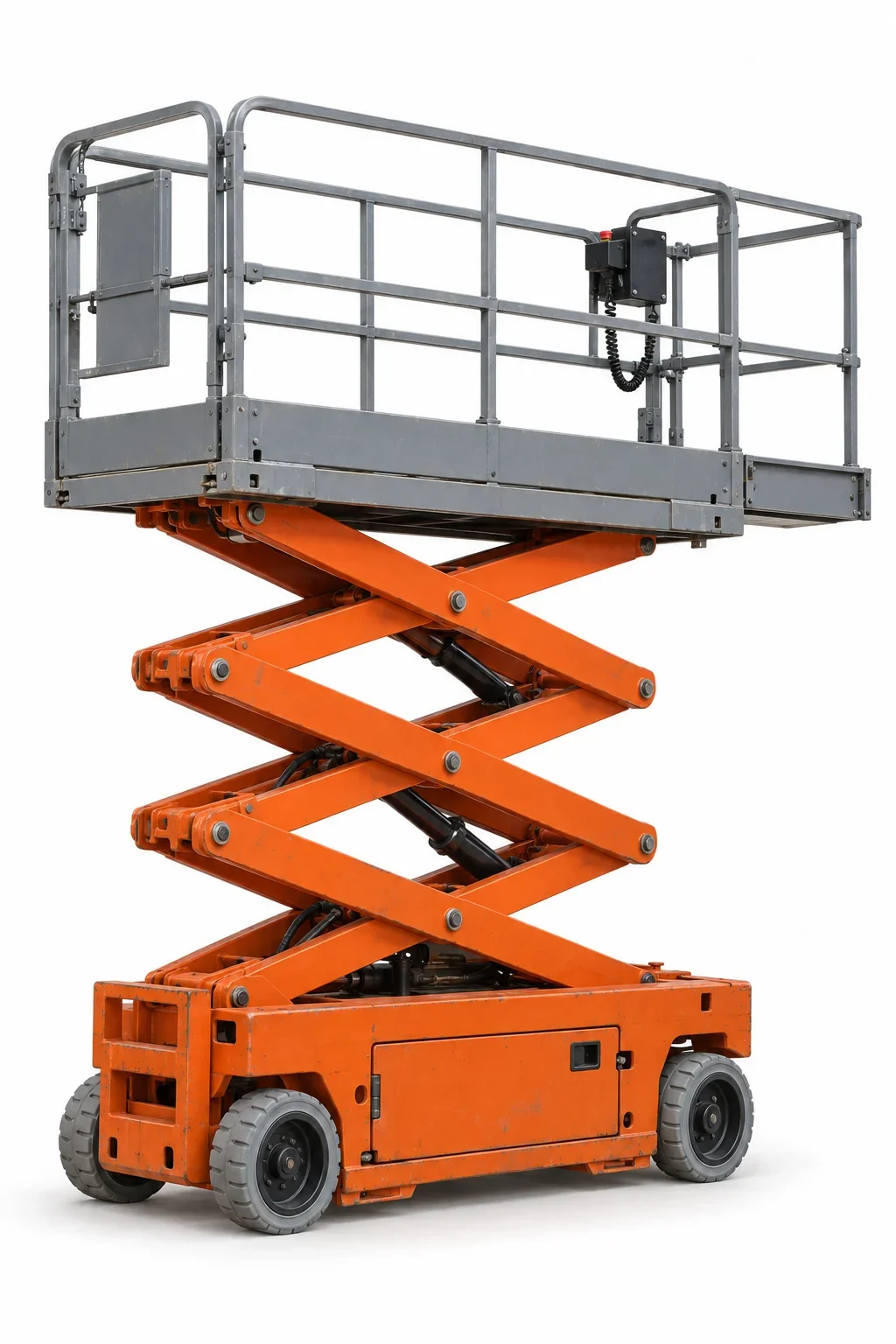
Electric slab lifts provide vertical reach with a solid deck for tools, filters, and parts common in logistics and light assembly spaces. Plan for: - Platform height needed under lights, sprinklers, or duct runs - Deck extension length to center work without re-spotting - Platform capacity for crew and materials
Floor and power considerations
Indoor Greensboro floors are typically polished concrete with defined load ratings. Check: - Point loads at expansion joints and mezzanines - Non-marking tire needs to protect finished floors - Charging access if the lift remains onsite between shifts
When an electric scissor isn’t ideal
If the work sits beyond conveyors or under obstructions, vertical-only travel can be limiting. For up-and-over access, compare options at /aerial-lift-rental/ or /boom-lift-rental/. For outdoor or mixed-surface travel, see /rough-terrain-scissor-lift-rental/.
Local cues that change sizing
- Long Greensboro warehouse runs reward narrower lifts with strong straight-line tracking and stable end-aisle turns.
- Climate-controlled interiors reduce weather variability, so height, width, and weight clearances drive most decisions.
- Some commercial corridors include tight elevator lobbies; verify stowed height to avoid header conflicts.