Start with the obstacle map
- What must the platform reach over or around?
- How far back from the task must the machine sit?
- Are there swing clearance limits near walls, racks, or steel? These answers guide whether multiple joints (articulation) or long straight outreach (telescopic) fits better.
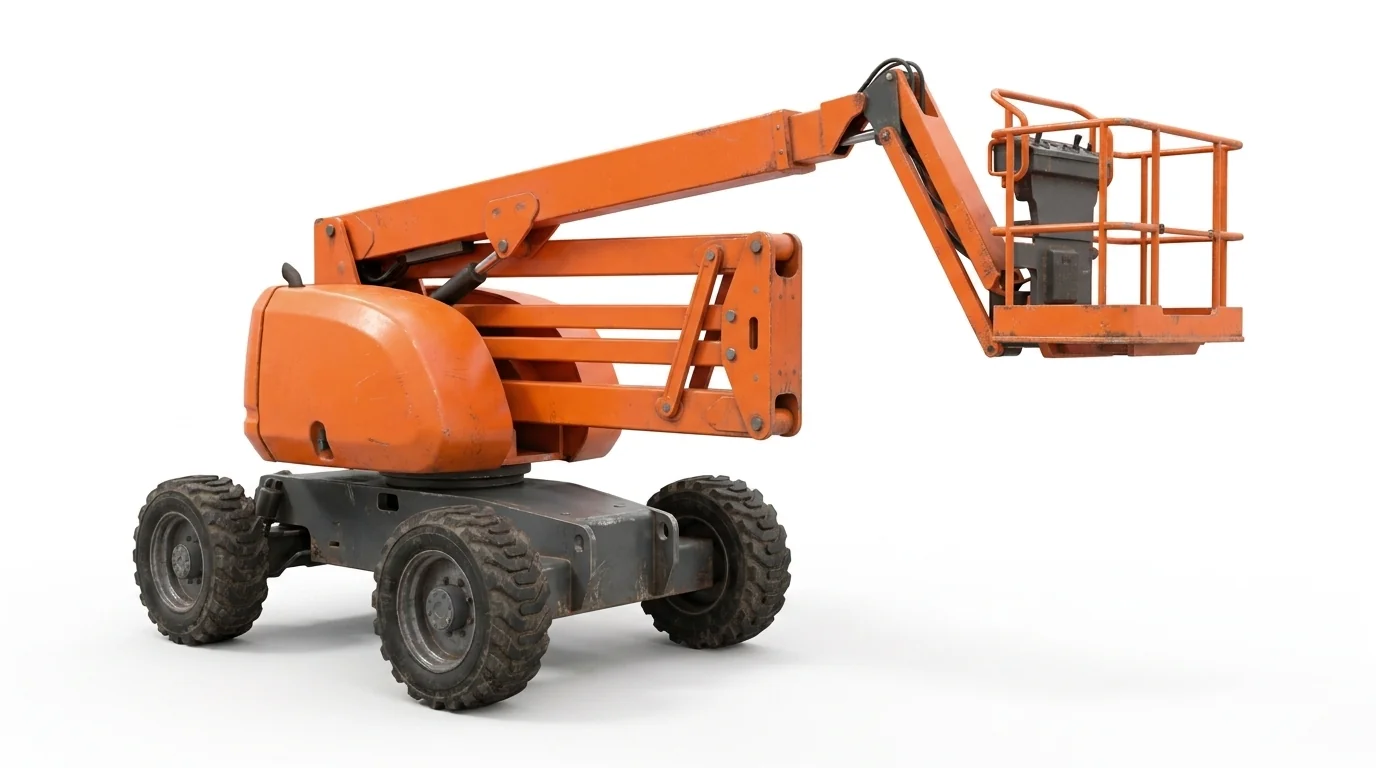
Articulating booms
Best where pathfinding matters—around pipe racks, conveyors, or architectural projections. Jointed sections allow up-and-over positioning with tighter tailswing in congested areas, common in Greensboro’s production and logistics interiors.
Telescopic (straight) booms
Favored on open exterior pads where set-back distance is available. Long straight outreach helps reach façade and structural points quickly across graded areas. On Piedmont-influenced soils, verify approach lanes for firmness after rain. Actual conditions, the selected unit’s instructions, and site procedures govern.
Power source and surfaces
- Electric and hybrid units suit indoor or low-emission zones with smooth floors.
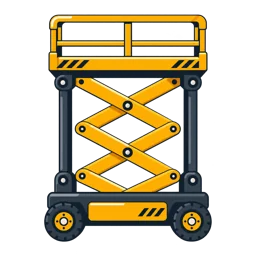
- Diesel models address outdoor grades, wind exposure, and longer travel on uneven ground. When floors, doorways, or aisle widths constrain movement, a compact scissor may be more efficient; see /electric-scissor-lift-rental/. For vertical outdoor work without outreach, see /rough-terrain-scissor-lift-rental/.
Greensboro planning notes
- Interior routes can involve elevators and mezzanine gates; check stowed height and tailswing.
- Exterior industrial sites may mix gravel and clay; choose footprint and tire configuration that respects those transitions.
- If the scope splits between inside and outside, plan staging to avoid moving a large boom through finished areas.