Where an articulating boom makes sense in Greensboro
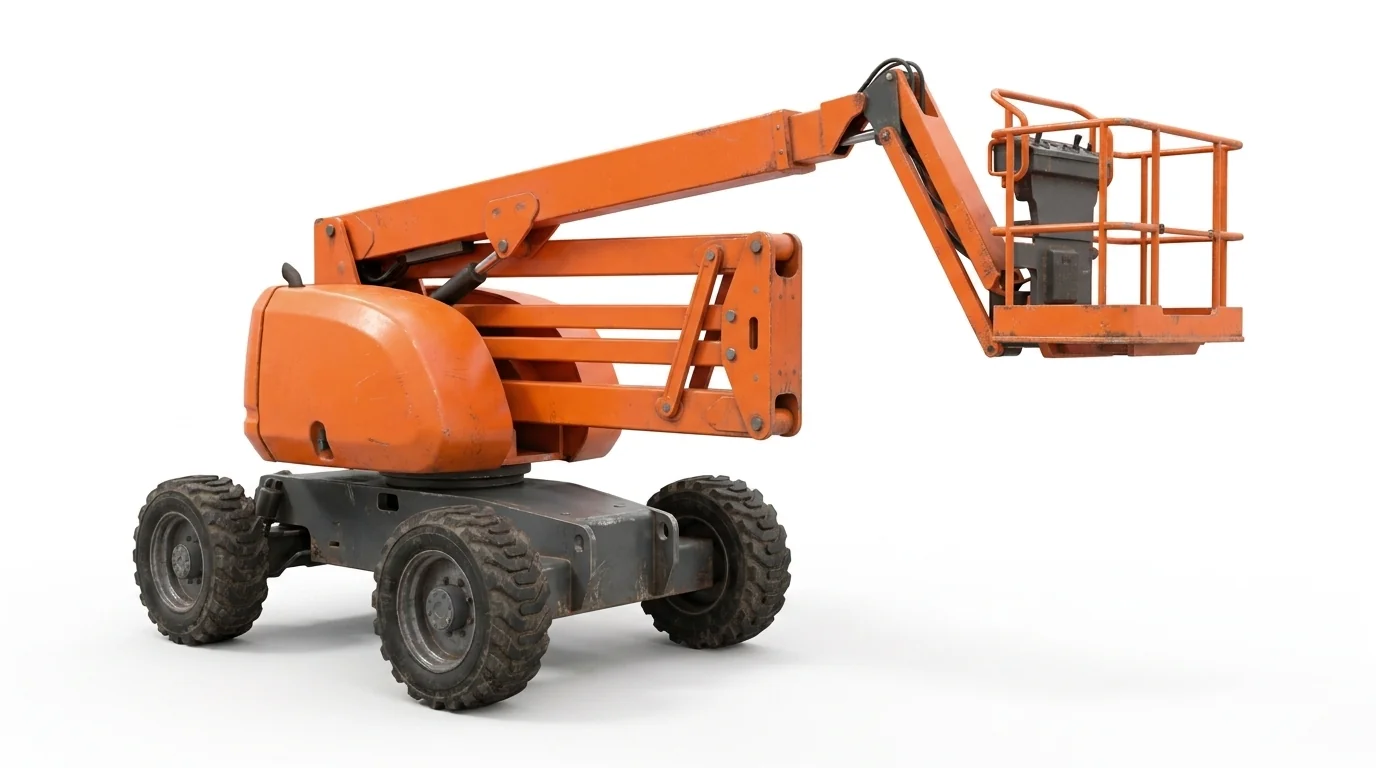
Articulating sections swing up and around overhead barriers. In Greensboro’s logistics and aerospace-oriented facilities, that means clearing racking, duct runs, and assembly jigs while staying within narrow floor lanes. Outdoors, humid summers and clay-heavy ground can stay slick after rain; the jointed boom lets you stage on firmer footing and arc over landscaping, utilities, or grade drops.
Key geometry questions:
- Can the machine sit on firm, level ground away from the obstacle and still reach the task?
- How high is the obstruction you must clear, and how far back must the base sit?
- Do you have aisle width and turning room for the chassis to position without contacting stored goods or fixtures?
Surface and tire considerations
Greensboro’s Piedmont soils can rut when wet. If the work is outdoors on unfinished surfaces, rough-terrain configurations and adequate ground clearance often govern. For interior service in climate-controlled buildings, electric models with non-marking tires fit slab conditions and emissions policies. When ground stiffness is questionable, the shorter wheelbase and flexible positioning of an articulating unit can reduce how close you need to get to the hazard zone.
Height, outreach, and platform geometry
Articulating booms trade some straight-line reach for up-and-over capability. Useful details to document before you compare models:
- Platform height and required working envelope above the obstacle
- Horizontal reach to the work from the machine’s likely parking spot
- Platform capacity needed for people, tools, and parts
- Power type: electric for indoor slab; diesel or hybrid for mixed or exterior tasks
When a different aerial makes more sense
- Long, unobstructed façade or steel work often favors a straight boom. See /telescopic-boom-lift-rental/.
- Tight, level interior maintenance without overhead barriers often points to an electric scissor: /electric-scissor-lift-rental/.
- Uneven exterior ground with shorter heights but wide decks for two-person work may align with rough-terrain scissors: /rough-terrain-scissor-lift-rental/.
As with any elevated task, conditions on the day of work, the selected unit’s instructions, and site procedures control what is acceptable.
Greensboro planning checklist
- Verify slab or soil condition after recent weather
- Measure set-back distance from the nearest safe staging point to the work face
- Note overhead and side obstructions along the approach path
- Confirm indoor clearance limits at doors, tunnels, and mezzanines