Define the work zone and approach
- Can the machine park below the task on compacted ground?
- Are there transitions over curbs, trench plates, or unfinished ramps?
- How wide must the unit be to stay stable without blocking other trades? A clear map of approach and setup points narrows the size and tire configuration.
Why surface matters in Greensboro
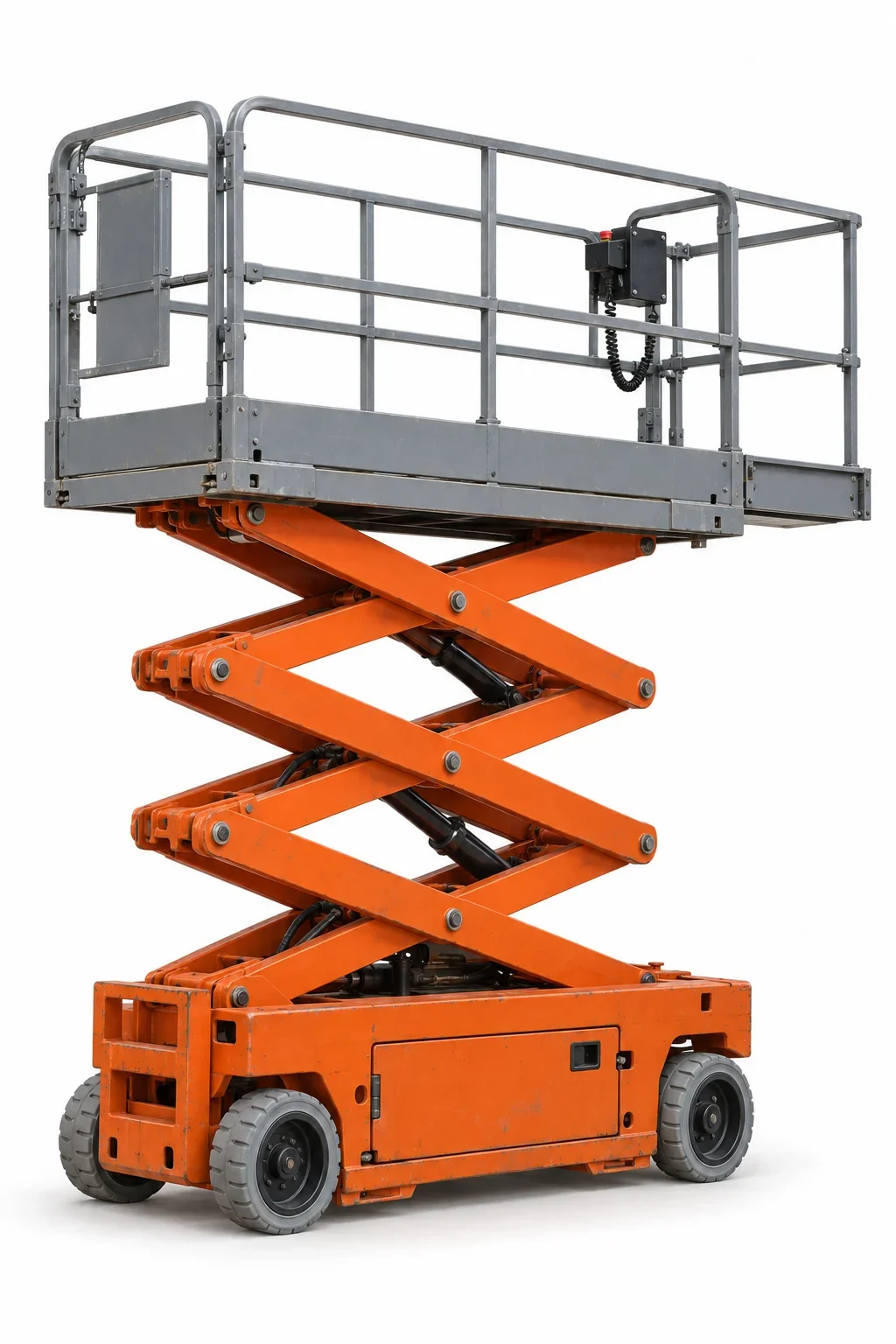
Clay-heavy soils can firm up when dry and turn slick after summer storms. On mixed gravel and clay, rough-terrain scissor lifts help maintain traction and platform level within their design limits. Actual conditions, the selected unit’s instructions, and site procedures govern safe setup and use.
Sizing the platform
- Platform height based on exterior panel, glazing, or duct riser elevations
- Deck capacity for tools and bundles to reduce trips across soft ground
- Width and weight trade-offs versus gate and pad constraints
When to consider a boom instead
If the task is recessed beyond structural members or utilities, vertical-only reach may not suffice. Compare articulating and telescopic booms at /boom-lift-rental/ and /aerial-lift-rental/ for up-and-over approaches.
Greensboro planning tips
- Early grading around industrial sites can hide soft pockets; identify travel lanes that stay consistent through the day.
- Open sites can add wind exposure at height; confirm project limits and site rules before lifting.
- Mixed scopes that move indoors later may require a handoff to an electric slab unit at /electric-scissor-lift-rental/.